-
12:30
39C3 LED badge -- SMD for Beginners

Surface Mounted Devices (SMDs) are small compared to Through Hole (TH) electronic components, and have the reputation of being difficult to work with as a hobyist: Difficult to see and handle, when you sneeze, you loose them and you can not easily use them on 2.54mm raster prototyping boards.
SMD components are designed to be used in a reflow soldering process where tiny dots of solder paste are applied to a Printed Circuit Board (PCB), after which the SMD components are "Picked and Placed" on the PCB, after which the whole PCB is heated to the melting point of the solder ("reflowing"), actually completing the electrical connections.
This workshop is aimed at showing you that the reputation of being difficult to work with is a bit undeserved, and that you can also work with SMDs using just a regular soldering iron: With some simple tricks and a suitable selection of components (not the smallest possible), the vast majority of people can successfully complete this project.
Being able to solder SMD projects using just a simple soldering iron will also help you develop some skills that are useful if you need to do "rework" on reflow soldering projects. Reflow soldering is also not difficult to do as a hobbyist, but requires a few more tools like a stencil to apply solder paste and either an oven or a hot plate to do the reflowing. It is, however, much quicker than soldering the parts one by one, and can yield more professional looking, cleaner, solder joints.
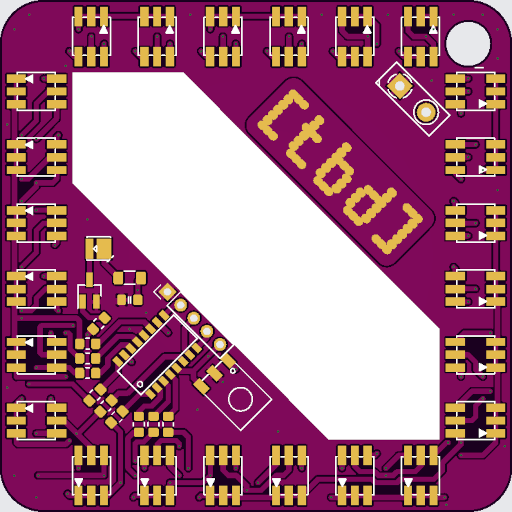
The project is an electronic name-badge - You should write your name (or nick) on it and wear it. It contains 42 LEDs, a microcontroller, some support components and an InfraRed transmitter and receiver that allow it to communicate with other badges. When the badge detects the presence of other badges ("friends") nearby, it will change its behaviour. It will not only interact with other 39C3 LED badges, but also with TBD badges - come visit the TBD assembly at komona or https://tbd.camp
Costs
This workshop is donation based. Materials costs are 2 euro per badge. Donations will go towards 1) covering costs of the badges, 2) covering costs of running the hardware hacking area in general, 3) covering costs of organizing TBD (see the TBD assembly at komona or https://tbd.camp)
Registration
The number of participants per session is limited. First come, first served. Either get a participation voucher beforehand or show up early (there may be places left). There will be numbered paper vouchers available for each session some time in advance of each session. If you get a voucher and do not show up before the designated starting time, someone else may take your spot. Please don't take multiple vouchers and don't take vouchers if you don't actually plan to participate.
Getting a kit
Kits are part of the workshop and not for sale separately. You can, however easily source your own PCBs and parts and make kits yourself because the design is MIT licensed open source.
Links
https://github.com/hackwinkel/39C3LEDbadge