-
11:40
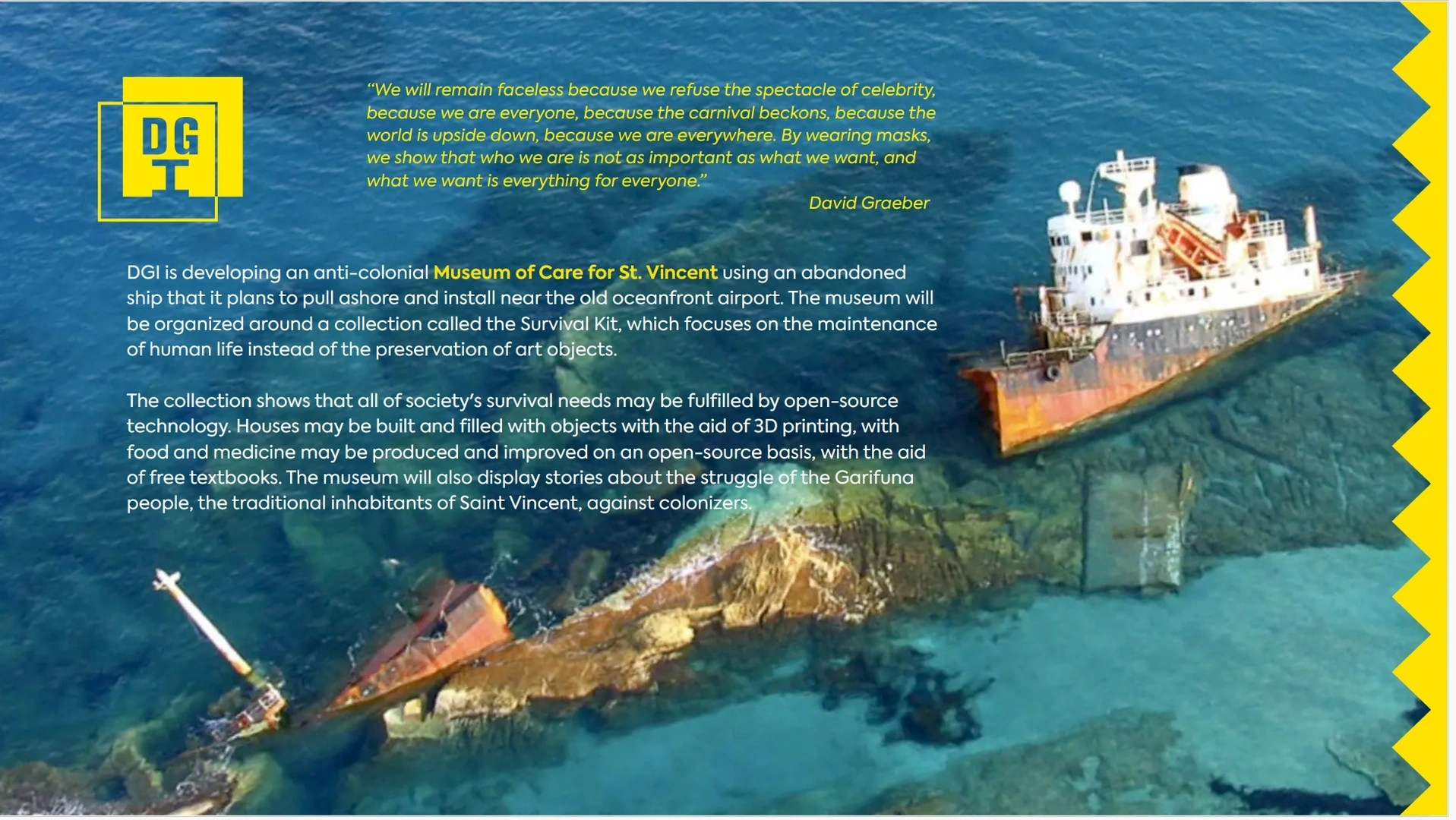
We think humanity could already be living in a society of abundance and communal luxury. We have the technologies to produce enough for everyone to have everything. The issue isn't technological but social. This is why we need a Museum (of Care): museums are among the few places that create, distribute, and preserve what a society values.
What will be at the session: We'll tell in more detail about the concept of the Museum of Care on abandoned ships (of which, according to Maritime Foundation data, there are more than 4,500 in the world). We'll talk about the halls of our museum: the Hall of Giants and other emerging spaces. Projects we're building—spirulina farms, 3D printers—in Saint Vincent (Caribbean) and Kibera Art District, Nairobi Kenya, Playground designed that communities can construct with nearly no resources. Can we actually build a nomadic museum proud not of its unique exhibits but of how easily they spread and get replicated?
Then we will move to an open conversation about what poetic technologies are and how they differ from bureaucratic ones. Some people may have read David Graeber's book The Utopia of Rules; here you can download his other texts that are less widely known or not yet published. We would very much like to explore the question of poetic and bureaucratic technologies together with you. To facilitate this discussion, the David Graeber Institute has invited Alistair Parvin, creator of the Wiki House project, to join Nika Dubrovsky in conversation.
The discussion continues in the format of a Visual Assembly—focused on building a distributed, non-hierarchical, genuinely open University with different ideas of funding and knowledge production. This is the very beginning of the process so all input is very much welcome. We'd welcome any ideas, critiques, or proposals for collaboration.