-
23:40
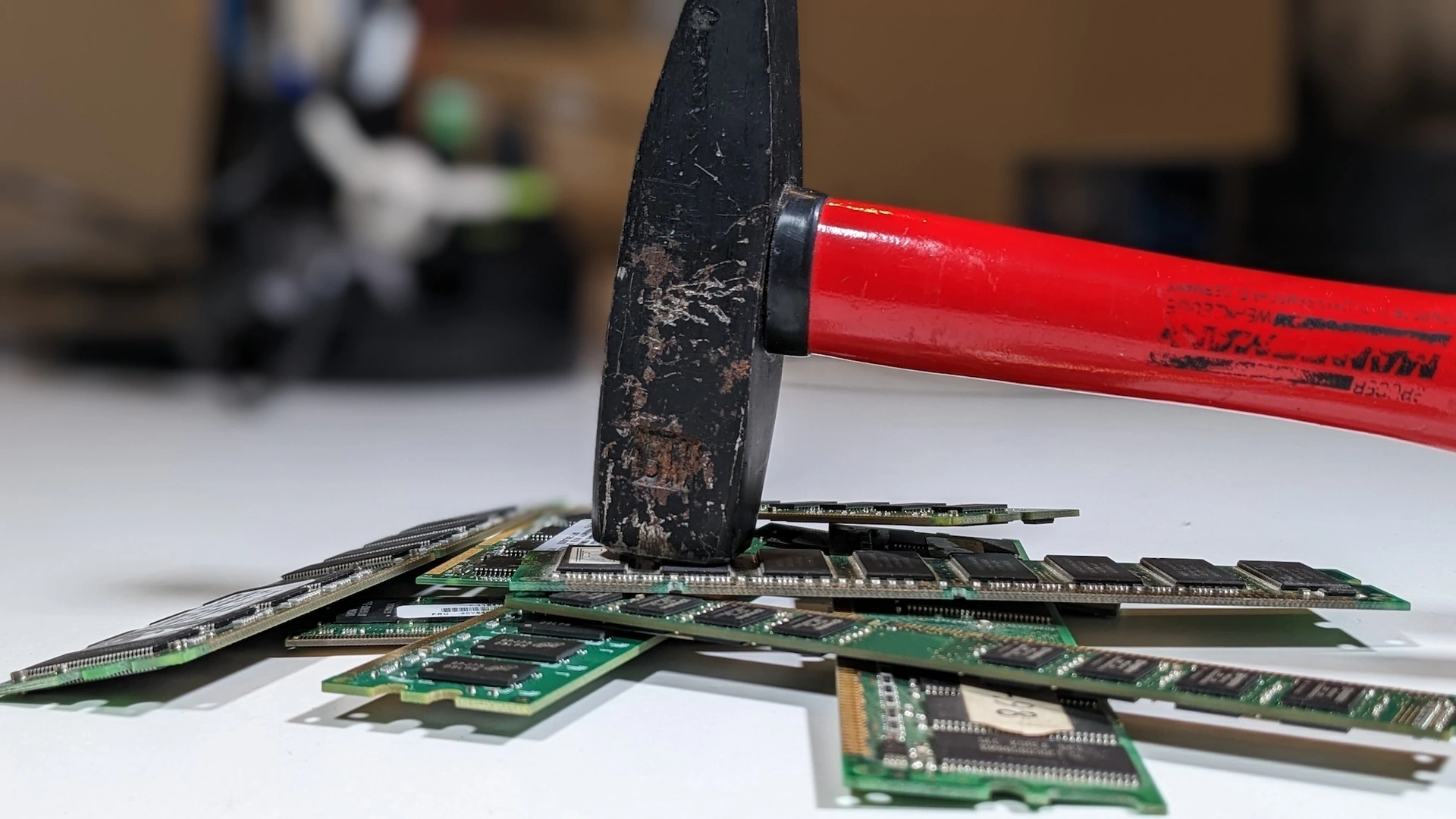
This will be a followup talk after our talk "Ten Years of Rowhammer: A Retrospect (and Path to the Future)" at 38C3. In the talk last year we gave an overview of the current state of Rowhammer and highlighted that there are no large-scale prevalence studies. We wanted to change that and asked the audience to participate in our large-scale study on Rowhammer prevalence.
We performed the large-scale study on Rowhammer prevalence thanks to many volunteers supporting our study by measuring their systems. In total, we collected 1006 datasets on 822 different systems (some systems were measured multiple times). We show that 126 of them (12.5%) are affected by Rowhammer with our fully-automated setup. This should be seen as a lower bound, since the preconditions required for effective tools failed on ~50% of the systems. Among many other insights, we learned that the fully-automated reverse-engineering of DRAM addressing functions is still an open problem and we assume the actual number of affected systems to be higher as the 12.5% we measured in our study.
Now, one year after our talk at the 38C3, we want to give an update on the current state of Rowhammer, since multiple new insights were published in the last year: The first reliable Rowhammer exploit on DDR5, a JavaScript implementation of Rowhammer that works on current DDR4 systems, and an ECC bypass on DDR4, just to name a few. Additionally, we want to present the results of our large-scale study on Rowhammer prevalence which was supported by the audience from last year's talk.